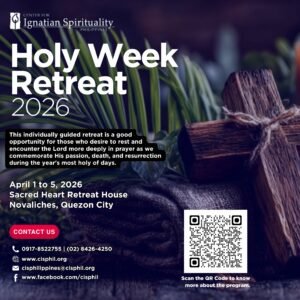
We offer 3, 5, and 8-day, and 30-day Ignatian Retreats, rooted in the Spiritual Exercises of St. Ignatius of Loyola. These guided retreats are a powerful way to deepen your relationship with God through prayer, discernment, and spiritual accompaniment.
By the term Spiritual Exercises, we mean every method of examining the conscience, meditating, contemplating, praying—whether vocally or mentally—and engaging in other spiritual practices. Just as taking a walk, traveling on foot, or running are physical exercises, so too the name Spiritual Exercises is given to any means by which we prepare and dispose our soul to free itself from disordered affections.
Once these affections are removed, the goal is to seek and find the will of God in the ordering of our life for the salvation of our soul. It is to overcome oneself and to order one’s life without being influenced by any disordered attachment, so that I may become able to love and serve His Divine Majesty in all things.
Why is it made in seclusion?
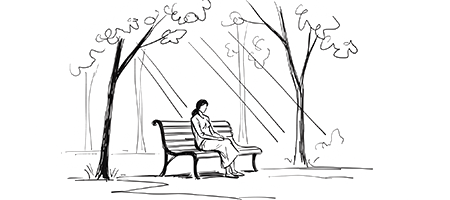
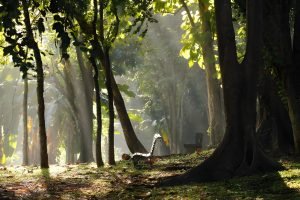
Ordinarily, in making the Spiritual Exercises, an exercitant will achieve more progress the more he or she withdraws from all friends and acquaintances, and from all earthly concerns—for example, by moving out of one’s place of residence and taking a different house or room where he or she can live in the greatest possible solitude, and thus be free to attend Mass and Vespers daily without fear of hindrance from acquaintances.
First, when we withdraw from friends, acquaintances, and activities that are not well ordered, we gain much merit in the eyes of God’s divine Majesty. This withdrawal helps us focus on serving and praising God our Lord.
Second, by living in seclusion and not allowing our mind to be scattered among many concerns, we free our attention for one purpose: the service of our Creator and our own spiritual progress. This gives us a clearer and more effective use of our natural faculties as we diligently seek what we truly desire.
Third, the more we keep ourselves alone and in silence, the more we prepare ourselves to approach our Creator and Lord. As we draw nearer to him, we become more disposed to receive his graces and the gifts that come from his divine and supreme goodness.
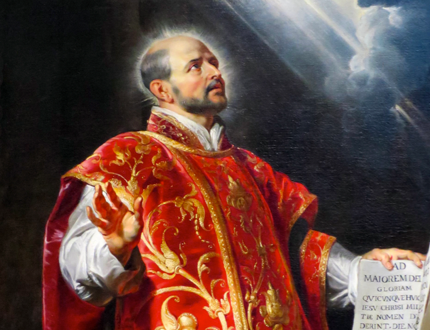
Who is St. Ignatius of Loyola?
How might St. Ignatius, the patron saint of those making a retreat, answer these questions? What did he say in his retreat guidebook (which was more a director’s guidebook than the retreatant’s), the Spiritual Exercises? A good way to get to his mind on the matter is to reflect on his own words and see how they may relate to one’s situation.
St. Ignatius of Loyola
Thus, the saint’s own words are given below without any comment. However, there are a couple of things that need to be said to properly appreciate what he said. First, he was mainly talking about the 30-day retreat. Second, he clearly looked upon the 30-day retreat as exemplar for other retreat-situations. Thus, he expected the director (whom he called giver of the Exercises), to adapt the Exercises according to where his or her exercitant (we say, retreatant) might be.
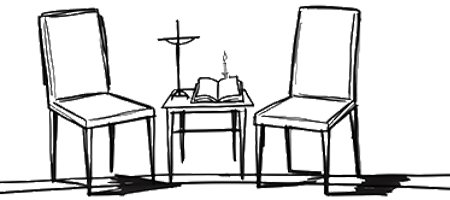
What is the role of a director?
The one giving the Exercises ought to allow the Creator to deal immediately with the creature and the creature with its Creator and Lord. Exercitants should be given, each one, as much as they are willing to dispose themselves to receive, for their greater help and progress.
What is the disposition needed?
The persons who receive the Exercises will benefit greatly by entering upon them with great spirit and generosity toward their Creator and Lord, and by offering all their desires and freedom to him so that his Divine Majesty can make use of their persons and of all they possess in whatsoever way is according to his most holy will.
A Prayer of Surrender
In the Contemplation To Attain Love, St. Ignatius asked the retreatant to say this prayer, the Suscipe:
“Take, Lord, and receive all my liberty, my memory, my understanding, and all my will — all that I have and possess.
You, Lord, have given all that to me. I now give it back to you, O Lord. All of it is yours.
Dispose of it according to your will. Give me your love and your grace. For this is enough for me.”