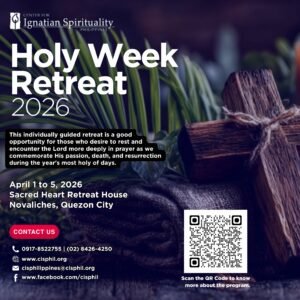
A Vacation with the Lord
This is a silent, individually-directed retreat rooted in the Ignatian tradition. Consider this your essential “Vacation with the Lord”. Following the spirit of the Spiritual Exercises of St. Ignatius of Loyola, this time is dedicated entirely to personal prayer, guided by Scripture and reflection points. It is designed to help you be more present with God, and discern His movements in your life.
What to expect
The retreat is held in a spirit of profound silence, providing the quiet needed to enter into His Presence. Upon arrival, you will be assigned a Spiritual Director (a Jesuit or trained lay person) who will meet with you daily. Your director will suggest specific Scripture passages and prayer methods tailored to your needs. Daily Mass, opportunities for the Sacrament of Reconciliation, and other communal liturgies are offered to enrich your experience.
Why this retreat is for you
Retreats serve as vital checkpoints for the soul. Many find this focused time essential prior to making a major life decision, completing a significant life examen, or simply for spiritual refueling. If you haven’t taken a dedicated pause in the past year or two, this retreat offers the structure and space required for a deep and meaningful rest, allowing you to hear God clearly and revisit your direction.
Essential guide for first-time retreatants
Here are key notes on Ignatian prayer, the role of silence, and what your daily schedule will generally look like.
1. Prayer methods and periods
Ignatian prayer is not just about talking to God; it is about paying attention to how God speaks to you through your thoughts, feelings, and imagination.
- Ignatian contemplation (Imaginative Prayer): You use your imagination to enter a Gospel scene (e.g., Jesus teaching by the sea). You don’t just read about the event; you place yourself there. You look at the people, listen to what is said, and notice how you feel.
- Lectio Divina is a traditional four-step method of prayerful engagement with Scripture, moving from reading to resting in God’s presence. It involves reading a short biblical passage slowly and repeatedly to find a word or phrase that resonates (Lectio), followed by a quiet reflection on its personal meaning (Meditatio). The process then shifts into an honest conversation with God about those insights (Oratio), and concludes by simply resting in silence, allowing the word to sink into the heart (Contemplatio).
Number of prayer periods: For a guided silent retreat, St. Ignatius suggests four to five distinct prayer periods per day, each lasting approximately 45 minutes to one hour. This is the core work of the retreat. Your director will help you space these out and provide the content.
2. The role of silence
Silence is the primary tool of the retreat. For a first-timer, this may be the hardest but most rewarding discipline.
- External silence: You commit to no talking with fellow retreatants, staff, or outside contacts (except your director). This includes putting away your phone and other devices that connect you to the outside world.
- Internal silence: The goal is to quiet the internal noise and mental chatter so you can better perceive God’s presence and direction. The silence is not a void; it is a space intentionally kept open for God.
- Modesty of the eyes: This is a traditional practice encouraged to maintain the retreat atmosphere. It means avoiding direct eye contact or prolonged glances at others. This simple courtesy helps every individual stay focused on their interior life and discernment without unnecessary distraction.
3. Typical daily routine (Structure)
A typical day offers a balance between structured activities and long blocks of uninterrupted personal time.
First day grace: For many, particularly those arriving stressed from city life, the first day is intentionally set aside primarily for rest. It is a necessary period of decompression that allows the soul to transition and enter fully into the silence. You might spend this day simply walking the grounds, praying a single period, and settling into the retreat with your guide.
Here is an example of your daily schedule:
| Time Block | Activity | Purpose |
| Morning | 1st & 2nd Prayer Periods | Dedicated time for deep, private contemplation using the points given by your director. |
| Breakfast | Silent Meal | |
| Late Morning | Individual Conference (~ 45 mins) | Meet with your director to share the fruits of your prayer and receive new points. |
| Noon/Afternoon | 3rd Prayer Period, Walk, or Rest | Time for a third block of serious prayer, exercise, or quiet rest on the grounds. |
| Evening | 4th & 5th Prayer Periods | Focused time to consolidate the day’s graces and prepare for rest. |
| Dinner | Silent Meal | |
| Night | The Examen/Journaling | Can be a time for short reflection on God’s presence throughout the day; Rosary |
Liturgy & Sacraments: Daily Mass and opportunities for the Sacrament of Reconciliation (Confession) are available, allowing you to integrate them into your personal schedule.
In silence God ceases to be an object and becomes an experience.
– Thomas Merton
Retreat packing guide: What to bring
To help you make the most of your “Vacation with the Lord” and support the atmosphere of silence, here are a few essential items to pack:
- A prayer journal and pen: This is your most important tool. You will need a dedicated notebook to write down the Scripture points given by your director. This is where you would record your feelings, and the fruits of your prayer after each period.
- Bible or sacred text: While some materials may be provided, having your own preferred copy of the Bible is helpful for personal prayer.
- Comfortable clothing: Pack simple, modest clothing appropriate for a religious setting and for the weather. Layers are often recommended as you move between indoor and outdoor spaces.
- Quiet shoes (or sandals): Footwear that allows for quiet walking is highly recommended for moving between your room, the chapel, the dining hall, and the outdoor paths.
- A wrist watch: Use a watch to keep your schedule. We highly encourage you to power down or leave behind all unnecessary electronics (phones, laptops, etc.) to eliminate distraction and fully commit to the silence.
- A water bottle or thermos: Staying hydrated is important, and having your own reusable container helps minimize noise and trips outside your dedicated area.
Event Details
Flexible scheduling - contact for availability
Contact organizer for Registration Fee
Location
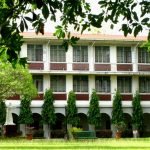
Sacred Heart Novitiate
Quezon city, NCR
Organizer

Sacred Heart Novitiate
Other Events
30-day Ignatian Retreat
Sacred Heart Novitiate